Stage
01
Inquiry
Tell us about your condition. Speak with our patient representatives — no obligation.
Stem cells, transcranial magnetic stimulation and microbiome therapy in one protocol, designed to address what's behind the behaviors, not just the behaviors themselves. See real patient stories. 62% reported quality-of-life improvement. 59% satisfied with the treatment outcome.
n=108 · See full breakdown →
Last updated
Autism is a complex neurodevelopmental condition that profoundly impacts the social and cognitive abilities of countless children. While conventional treatments and supportive interventions focus primarily on managing symptoms and enhancing daily functionality, they do not directly target the biological mechanisms that are being investigated in autism. Stem cell therapy offers a promising area of research, with studies suggesting its potential to improve some of the core symptoms associated with autism (1, 2).
Discover how stem cell treatment could be a transformative option for you or your loved one.
No. Stem cell therapy does not cure autism.
What the published studies and our own follow-up data describe is improvement in specific symptoms in many patients, though not in all. Clinical benefit is not guaranteed, the degree of improvement differs considerably from one child to another, and the treatment remains experimental for every age group. Research into how well it works, and for whom, is ongoing (5, 6, 7, 8, 9, 10, 11).
Stem cell therapy is being investigated for its potential effects on neurological, immune and inflammatory processes associated with autism, whereas the treatments described further down this page act on the behaviours that result from them. This is a different approach and does not amount to a cure (1, 2, 9).
One of the strongest recent controlled studies is a 2026 double-blind, randomized, placebo-controlled trial of intravenous umbilical cord blood mononuclear cells. It is one of the few trials in this field designed so that neither parents nor assessors knew who had received cells, and this is relevant because the usual measures are behavioural rating scales, which can be influenced by what parents expect. Over 13 weeks it found a measurable advantage over placebo on social responsiveness (p = 0.045) and, more robustly, on social cognition (p = 0.002). Adverse events were slightly fewer in the treated group than in the placebo group (5).
The result applies to a specific group. Thirty-six children were enrolled and randomized, and 34 completed the final follow-up and were included in the efficacy analysis. All were enrolled specifically because blood tests showed immune dysregulation: at least one inflammatory marker above 1.5 times the normal upper limit. Children who did not meet that threshold were screened out. The finding therefore applies to children with an inflammatory profile, not to autism in general (report summary) (5).
An earlier 2020 Duke University Phase II trial randomized 180 children with autism aged 2 to 7 to a single intravenous infusion of umbilical cord blood (their own or a donor’s) or placebo. It did not show a significant improvement in the primary socialization outcome across the full study population. In children without intellectual disability, the researchers reported encouraging findings in communication and in some exploratory measures of attention, although these analyses were not corrected for multiple testing. No serious adverse event was attributed to the cells, but infusion reactions occurred in 10% of the children given cord blood, four of them severe, all in children who received donor cord blood. The authors concluded that the results did not support the use of cord blood for autism outside a clinical trial. This trial used cord blood, not umbilical cord tissue MSCs (report summary) (6).
A separate 2020 Duke University Phase I study looked specifically at intravenous umbilical cord tissue-derived mesenchymal stromal cells (MSCs) in 12 children with autism. The treatment was generally safe and well tolerated, and 6 of the 12 children showed improvement in at least two of the three autism-specific measures used. The study was open-label, so the authors could not say whether those improvements came from the cells, and they concluded that the findings supported further controlled research into umbilical cord-derived MSCs in autism (report summary) (7).
A 2026 meta-analysis of 22 studies found a significant pooled improvement after stem cell treatment, while reporting very high heterogeneity between the studies it pooled (I² = 95%), which means the studies differed so much in design, population and protocol that the combined figure shows the direction of the effect but cannot be read as a precise measure of it (report summary) (8). One further limitation is that the pooled analysis included a 2019 study of umbilical cord MSCs by Riordan and colleagues that the journal retracted in 2021. The stated reason was that participants had been charged to take part and this had not been disclosed, not a problem with the data, but it should be kept in mind when the pooled result is read (21).
A 2026 review of the field counted the whole clinical evidence base: nine registered trials, of which five are complete. The review lists what is still missing. Most are open-label, so the placebo effect cannot be ruled out; the large majority enrolled fewer than 50 participants; cell types, doses and routes differ so much between them that results cannot properly be combined; the assumed immunomodulatory mechanism has not yet been directly confirmed as the mechanism of clinical improvement in humans; and not one trial reports long-term efficacy or safety data (report summary) (9).
Overall, a growing number of studies have reported encouraging results, although findings have not been consistent across all trials. Most of them are small and uncontrolled, and there is no long-term evidence yet. All of our summaries are listed on the autism medical reports index.
Autism is generally diagnosed during early childhood, and early developmental intervention in autism is associated with better developmental outcomes (2, 3).
Suitability is decided case by case. Every enquiry goes to our medical department, which reviews the patient’s medical condition through our online medical evaluation system and only then recommends a specific treatment location and protocol. We recommend speaking to our specialists before you decide, so that you know what can realistically be expected in your case.
Send us the medical records and our team will come back to you.
Every patient is reviewed individually by our medical team before treatment is accepted. Treatment may be declined, postponed, or require additional medical evaluation when there is a condition that could increase the risks of stem cell administration, intravenous infusion, sedation, or lumbar puncture. Similar safety considerations have also been used as exclusion criteria in published clinical studies of cell therapy for autism (5, 7, 20).
Possible exclusion or temporary deferral criteria include:
These are general safety considerations rather than absolute exclusions in every case. Some conditions may only require treatment to be postponed until the patient has recovered or become medically stable, while others may require additional investigations or modification of the treatment protocol. Final eligibility is determined individually after review of the patient’s medical history, current condition, medications, laboratory results and relevant medical reports.
We do not currently publish an overall acceptance or rejection percentage. Each application is reviewed individually. Some patients are accepted immediately, while others may require additional medical information, treatment of an existing condition, a period of medical stability or a modification of the proposed protocol, and some may ultimately not be considered suitable for treatment.
Based on follow-up reports from 108 patients across 218 forms, here is the percentage who self-reported any improvement after treatment.
| Symptom | % of Patients who noticed Improvement | % who noticed a Small Improvement | % who noticed a Moderate Improvement | % who noticed a Significant Improvement |
|---|---|---|---|---|
| Uses eye contact | 77% | 42% | 20% | 16% |
| Responding to commands | 74% | 34% | 24% | 16% |
| Aware of environment | 71% | 45% | 20% | 6% |
| General mood | 70% | 39% | 22% | 9% |
| Interaction with others | 69% | 41% | 25% | 4% |
| Concentration | 69% | 45% | 14% | 10% |
| Expressing own needs | 67% | 37% | 24% | 7% |
| Cooperation with others | 67% | 39% | 20% | 8% |
| Interest in others | 59% | 28% | 23% | 8% |
| Sleep disturbance | 59% | 37% | 15% | 8% |
| Temper tantrums | 57% | 28% | 18% | 11% |
| Comfortable with physical contact | 57% | 23% | 25% | 10% |
| Plays appropriately | 55% | 34% | 13% | 8% |
| Using more than one word at a time | 54% | 25% | 18% | 11% |
| Hyperactivity | 52% | 24% | 22% | 6% |
| Uses greetings | 52% | 34% | 12% | 6% |
| Dressing himself/herself | 49% | 23% | 20% | 7% |
| Appropriate facial expressions | 48% | 28% | 14% | 5% |
Patients self-assess each symptom on a 5-point scale (Worse / No improvement / Small / Moderate / Significant) at follow-up checkpoints after treatment, comparing to their pre-treatment baseline. "Reported improvement" combines the small, moderate and significant buckets. Data is updated daily from our internal patient registry. As with any medical treatment, past results do not guarantee future outcomes — improvements vary from patient to patient.
| No | 38% |
| Yes - has slightly improved | 32% |
| Yes - has moderately improved | 25% |
| Yes - has significantly improved | 6% |
| reported quality-of-life improvement | 62% |
| No | 46% |
| Yes - small improvements | 33% |
| Yes - moderate improvements | 16% |
| Yes - significant improvements | 5% |
| reported physical improvement | 54% |
| No | 23% |
| No comment | 18% |
| Somewhat satisfied | 33% |
| Yes | 26% |
| satisfied with the treatment outcome | 59% |
Updated · 108 patients followed up · 218 follow-up forms · See full breakdown →
*It is important to remember that as for any medical treatment, improvements cannot be guaranteed. Please contact us for more information regarding the possible improvements for a particular case.
Stem cells are immature cells with the ability to self-renew and, depending on the type of stem cell, develop into one or more specialized cell types. They can develop into ectodermal (ex. skin and some neurological structures), mesodermal (ex. bones, cartilages, and blood cells), or endodermal cells (ex. cells of internal body organs). The MSCs used in our treatment are multipotent cells, meaning they can develop into several specialized cell types and, importantly, release biological signals that can influence surrounding tissues. Therefore, injecting stem cells may support tissue repair not only through their ability to differentiate, but also through the biological signals they release (12, 13).
However, following extensive testing of stem cell treatment on people with autism, in addition to their self-renewing and differentiation abilities, MSCs may have additional therapeutic effects beyond tissue replacement, including (9, 13):
Published studies and our own patient follow-up data have reported that the use of stem cell therapy in autistic people has shown improvement in (5, 6, 7, 10, 11):
Changes on functional brain imaging techniques were also seen in some studies, with the brains of autistic people showing changes in glucose metabolism following stem cell transplantation. These changes may reflect improvements in brain activity and functional connectivity following stem cell therapy, although in one of the two studies they did not reach statistical significance and their clinical significance is still being studied (15, 16).
Like any medical treatment, stem cell therapy can have side effects. Many of the short-term reactions reported are similar to those that can occur after an IV infusion or injection, such as fever, headache, nausea, temporary discomfort, or an allergic or immune reaction. Intrathecal administration also involves a lumbar puncture and may cause temporary procedure-related symptoms such as headache, back discomfort, nausea or vomiting (5, 7, 10). Side effects reported specifically in clinical trials of stem cell therapy in autism are:
None of the side effects reported in those trials were life-threatening, and most reported reactions were temporary and managed medically when they occurred (5, 6, 7, 8, 9, 10, 16). A 2026 Phase I trial is the closest published study to our own delivery route: three intrathecal injections of umbilical cord-derived mesenchymal stromal cells, a month apart, in five children aged 3 to 7. Over six months it recorded no serious adverse events, but every child had at least one transient reaction: fever in 5 of 5, vomiting in 4 of 5, nausea in 3 of 5. The fevers carried no meningeal signs and settled within 12 to 48 hours on paracetamol. Parents may find two findings from that paper useful. A short fever after an injection was common and was not accompanied by evidence of infection. Reactions also became more frequent and more marked with each successive injection, so the first was the mildest (report summary) (10). Our protocol delivers cells both intravenously and by intrathecal injection, which is performed after a lumbar puncture, a procedure with its own risks, which the treating physicians go through with you before you consent.
On the cells themselves: both cell types we use have been studied for safety. A 2026 meta-analysis of 42 randomized trials of intravenous umbilical cord MSCs, in adults, found no signal of tumour or ectopic tissue formation, while noting that such events are rare and that most trials followed patients for a year or less (14). The cord blood trials in children described above reported no serious adverse events attributable to the cells (5, 6). Unlike embryonic stem cells, these cell types have not shown a tendency to form tumours in clinical studies to date.
Every batch of cells is screened, tested twice and traceable by code before it is released for use. The full process is described on our standards and certifications page.
Treatment is delivered at affiliated hospitals in Bangkok, Thailand and in Dongguan, China. It is not approved by the US Food and Drug Administration and is not offered in the United States. It is given under Thai and Chinese regulations for cell therapy, and the cells are prepared in laboratories with CNAS, GMP and ISO accreditation. The accreditation details and the certificates are on our standards and certifications page.
Beike is unlike any other stem cell treatment provider in the world, the reason? Since 2005, we have been developing and optimizing our stem cell treatment protocols with the concept that only a very comprehensive solution can allow our patients to truly benefit from stem cells. Based on our clinical experience, we believe that stimulation through various therapies can help to enhance stem cell regenerative response, therefore our protocols include daily therapies to support the stem cells. Finally, we provide a wide variety and large quantities of stem cells in order to adapt to each patient specific condition and deliver maximized regenerative potential.
Our stem cell therapy for autism program consists of 6 to 8 scheduled administrations of umbilical cord derived stem cells. The stem cells are transplanted using two separate methods: by intravenous way using a standard IV drip system, and through intrathecal injection performed after lumbar puncture. These two delivery methods allow for increased efficacy while ensuring safety and minimum inconvenience for the patient.
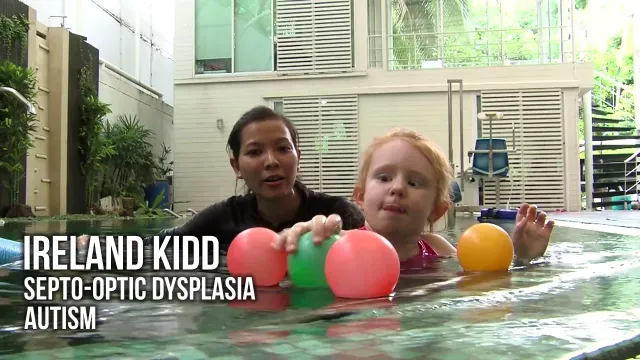
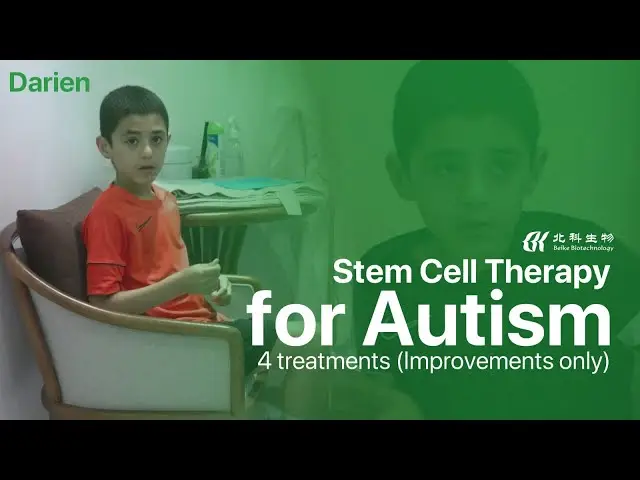
Ireland Kidd was diagnosed with Septo-Optic Dysplasia and Autism with no hope for improvement from local doctors.
Her mother tells of their comprehensive stem cell therapy journey with Beike stem cells and functional medicine provided at Better Being Hospital in Bangkok, Thailand. filmed during their second treatment.
Watch more videos
Medically reviewed by
Dr. Mohammad Alzogool
Medical Director
Beike's Medical Director, Dr. Mohammad Alzogool, is a physician-researcher with a background in ophthalmology and regenerative medicine. His research contributions span ophthalmology, regenerative medicine, artificial intelligence, medical imaging, and evidence-based clinical guidelines. He brings a strong scientific and clinical perspective to the evaluation of emerging regenerative therapies.
Published Last updated
Find out more about patients previously treated with Beike stem cell protocols. The families participating in these blog posts talk about their stories and present their own view of the treatment, including thoughts regarding the daily therapies, the stem cell injection themselves as well as improvement noticed during and after treatment.
Patients and their families talking about treatment, recovery and the changes that mattered most to them.

Plain-language summaries of independent, peer-reviewed studies. Each one links to the original publication.
From your first inquiry to post-treatment follow-up —
we guide you every step of the way.
Tell us about your condition. Speak with our patient representatives — no obligation.
Our doctors review your medical records and recommend a tailored protocol.
Receive specialized stem cell therapy at our partner hospital, fully supervised.
We stay in touch and monitor your progress for the months that follow.
No obligation. We’ll review your situation and respond within 48 hours.
Answering patient inquiries since 2005. A medical evaluation follows once we have your completed medical questionnaire.