
If you’re considering stem cell treatment abroad, one question comes before everything else: is this actually safe and legitimate, or am I taking a risk on something I can’t verify?
It’s the right question to ask. Here’s the direct answer: every stem cell package Beike offers, not just one treatment line, follows the same full traceability standard. From the moment a single dose of umbilical cord-derived mesenchymal stem cells is collected to the moment it’s infused into a patient, every stage is recorded, tested, and can be verified by you or your doctor. No exceptions, no shortcuts.
Here’s exactly how that tracking works, step by step, and how you can check it yourself…
How Are Stem Cell Donors Screened? (Collection)
Every batch starts with the umbilical cord, collected right after a mother gives birth. Before that can happen, the donor (the mother) goes through a full health screening, including tests for infectious diseases like HIV, Hepatitis B, Hepatitis C, and syphilis, plus a review of family medical history. The collection itself only happens in a proper medical setting, carried out by trained professionals.
How Are Stem Cells Transported Without Losing Quality? (Transport)
Once collected, the cells travel from the hospital to one of Beike’s regional cell preparation centers inside a temperature-controlled container fitted with a real-time temperature logger, so the cells stay within a safe range the entire way. Every shipment comes with a full transport record: departure time, arrival time, who handled it, and which vehicle carried it.
How Are Stem Cells Prepared and Processed? (Preparation)
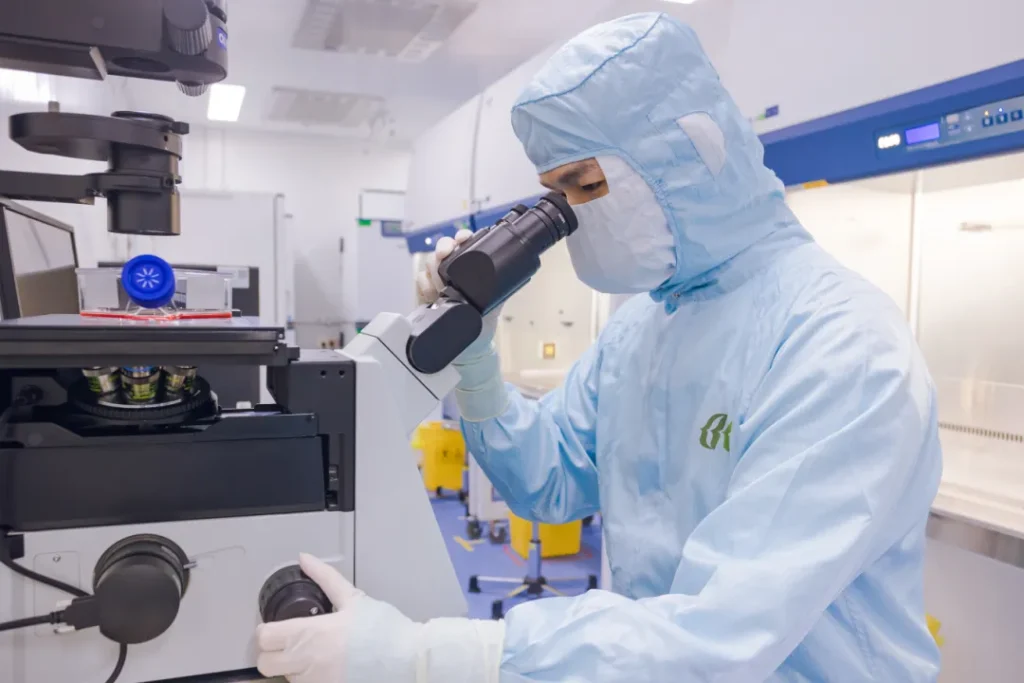
This is where the real work happens. Beike has spent more than 21 years developing its cell preparation process, building an in-house system that covers everything from manufacturing technique to the reagents used in the lab. That includes a proprietary serum-free culture system, a patented cryopreservation solution, and a patented controlled-rate freezing technique.
That research has resulted in 242 patent applications and 172 granted patents. It’s this depth of in-house development that allows Beike to move treatments from the lab bench all the way to the clinic.
How Are Stem Cells Quality Tested? (Quality Control)
Cells don’t go straight from preparation to a patient. First, they go through a quality check covering up to 910 individual checkpoints: cell characteristics, purity, safety, effectiveness, and stability. Beike was also one of the first in the industry to bring in independent third-party labs for additional testing, so every batch gets checked twice, once internally and once by an outside lab, before it’s ever released.
Already wondering how this applies to your specific condition?
[Talk to us here] We’ll walk you through what the process looks like for your case, no obligation.
How Are Stem Cells Stored Long-Term? (Storage and Recovery)
Cells that need to be stored long-term go to Beike’s comprehensive cell bank in Shenzhen, built to GMP and AABB standards. Inside, vapor-phase liquid nitrogen tanks keep cells at temperatures below -150°C, preserving them for decades. Every stored sample, its exact storage location, the date it went in, and who handled it, is logged in a digital tracking system.
When a sample is needed, the system locates it instantly. The thawing process follows a standardized procedure, and the cells are tested again afterward. Only cells that pass are cleared for clinical use.
How Can You Verify Your Own Stem Cell Treatment? (Clinical Application)
For every package, Beike runs an online verification system available to both doctors and patients. Before a dose is administered, you or your doctor can enter the unique traceability code printed on the cell product label and instantly see where it was produced, its batch information, quality testing report, and release status. No package is exempt. You’re never asked to simply take our word for it.
Why Full Traceability Matters
This entire system exists for one reason: trust. Patients can move forward with any treatment package knowing every dose is fully documented. Doctors can prescribe with confidence, knowing exactly what they’re working with. Regulators can oversee the process efficiently, because the data is transparent and accessible.
One recent example: in December 2025, Beike’s Type 2 Diabetes program launched in Boao Lecheng, following this exact same standard that already covers every package Beike offers. As more cell therapy products move through this process, the industry is moving toward a future where every treatment is traceable, monitored, and trustworthy from start to finish.
Frequently Asked Questions
Is Beike Biotechnology’s stem cell treatment safe?
Every Beike stem cell package goes through a full traceability process covering donor screening, cold-chain transport, GMP-standard preparation, up to 910 quality checkpoints, and third-party independent testing before release.
How do I know my stem cells are real and properly tested?
Each cell product carries a unique traceability code. You or your doctor can enter that code into Beike’s online verification system to see the production facility, batch information, quality testing report, and release status.
Does the traceability system cover all Beike treatment packages, or only specific ones?
It covers every package Beike offers. The system is a company-wide standard, not limited to a single treatment line.
Where are Beike’s stem cells stored?
Long-term storage happens at Beike’s comprehensive cell bank in Shenzhen, built to GMP and AABB standards, using vapor-phase liquid nitrogen tanks kept below -150°C.
What happens if a quality check fails?
Cells that don’t pass internal or third-party quality testing are not released for clinical use. Only cells that clear every checkpoint move forward to patients.
Can I ask Beike questions about my specific condition before deciding?
Yes. [Book a consultation] with our international team to discuss whether you may be a candidate and what the process would look like for you.
Have Questions About Your Own Case?
Reading about the process is one thing. Understanding what it means for your specific situation is another. Our international team can walk you through what treatment could look like for your condition, answer the questions this article didn’t, and help you decide if this is the right path for you.
No pressure, no obligation. Just clear answers from people who can actually verify what they’re telling you.
This article is translated and adapted from our Chinese platform. If you’d like to read the original, you can find it here.