
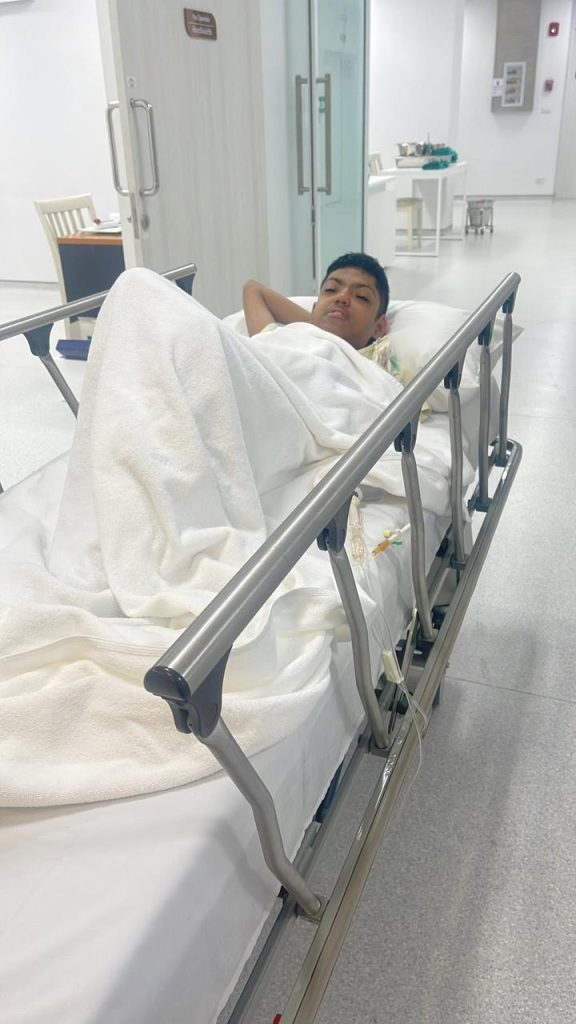
Ali is an 11-year-old patient from Karachi, Pakistan, diagnosed with spina bifida (myelomeningocele). Born with the condition, he underwent his first surgical intervention three days after birth. Over the following years, he had four additional surgeries addressing hydrocephalus (VP shunt placement), bilateral developmental dysplasia of the hip (DDH), and a bridge surgery for femoral stabilization.
Before treatment at Beike, Ali’s clinical picture included severe bilateral lower limb muscle atrophy with fat tissue replacement, pes cavus deformity, Achilles tendon thinning on the left side, knee contracture, drop foot, limited ambulation requiring braces or a walker, and ongoing bowel and bladder dysfunction, specifically constipation dependent on laxatives and reduced bladder control.
His family’s goal coming into treatment was clear: improved functional independence and ideally, ambulation without braces.
Why His Family Chose Beike
Before arriving in Bangkok, Ali’s mother, Sahar, researched stem cell treatment options across multiple countries, including Panama, India, Malaysia, and Mexico. Her primary concern was finding a provider with specific experience in spina bifida, not general anti-inflammatory stem cell protocols.
After a consultation with Dr. Worawit, she felt confident that the clinical team understood the nuances of her son’s condition and had a structured, condition-specific approach to treatment.
Treatment Protocol
Ali was treated at Better Being Hospital in Bangkok, Thailand, in June 2025. His protocol involved four stem cell injections using umbilical cord mesenchymal stem cells (UCMSC) – 60 million cells in total, delivered as a combination of intravenous (IV) and intramuscular (IM) injections over 10 days. The treatment was complemented by daily rehabilitation therapies throughout his stay.
The areas targeted for potential improvement, as assessed at intake, were sensation, bowel and bladder control, and overall quality of life.
Outcomes Reported After Returning Home
The patient’s mother reported the following improvements in a follow-up interview:
- Musculoskeletal: Previously atrophied muscles in the lower limbs showed functional activation, a change not observed before treatment. Foot size increased, suggesting continued neuromuscular development. Postural alignment improved, with a noticeable reduction in scoliosis severity.
- Bladder function: Meaningful improvement in bladder control was reported, reducing dependence on external management.
- Bowel function: While constipation remains present, Ali now experiences sensory awareness of bowel fullness, a function that was previously absent.
- Neurological and cognitive: Improved fine motor skills (handwriting), increased attention and focus, and overall greater maturity in daily functioning were noted.
Sahar summarized the trajectory this way: “The improvements didn’t happen overnight, but over time there were clear positive signs in his daily functioning.”
Clinical Notes
Results following stem cell therapy for spina bifida vary depending on the patient’s age, lesion level, prior surgical history, and baseline function. Ali’s case reflects gradual, multi-system improvement over the weeks following treatment, consistent with the expected response timeline for UCMSC-based protocols.
For more information about Beike’s spina bifida treatment protocol, contact one of our representatives.